
Features of TEAC Load Cells
Areas of Expertise at TEAC
TEAC specializes in the development of compact, lightweight, and low-profile load cells.
As an example, our standard models feature dimensions as small as φ12 mm × 4 mm in height and are available with rated capacities starting from 0.5 N.
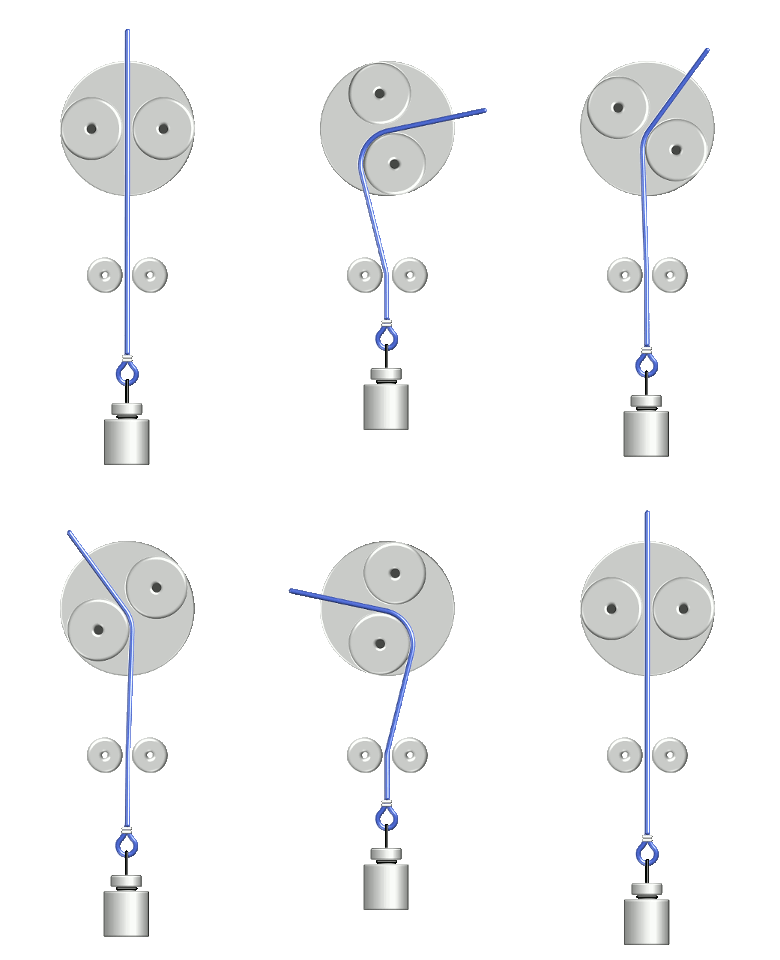
In addition to ultra-miniature load cells, TEAC has developed unique solutions based on proprietary structural designs, including load cells for crystal growth pullers and highly accurate miniature load cells.


Commitment to Standardization
TEAC load cells support modern industry standards and continue to incorporate advanced features as standard equipment.
TEDS Calibration
TEAC actively promotes support for TEDS (IEEE 1451.4 Transducer Electronic Data Sheet) in both load cells and load cell indicators.
As one of the earliest manufacturers in Japan to obtain a Manufacturer ID, TEAC achieved compatibility between load cells and indicators through TEDS technology.
Robot Cable Technology
Robot cables are designed to withstand repeated bending and flexing in moving parts such as industrial robots and machine tools, providing enhanced durability and stable performance.
We can also propose the most suitable cable specifications according to your application and operating environment.
Advanced Sputtering Technology
By employing sputtering technology, TEAC has achieved cost-effective load cell production while maintaining high performance.
This technology has enabled the development of load cells ideally suited for integration into manufacturing equipment and industrial machinery.
(Example: TC-NSRSP (T)-G3)
High-Precision Measurement
TEAC load cells utilize highly accurate strain gauges as sensing elements. Excellent characteristics such as low non-linearity, minimal hysteresis, and outstanding repeatability enable precise and reliable measurements.
Excellent Stability Through Sealed Construction
Many TEAC load cells feature a sealed structure that prevents performance degradation over time.
The sealed design protects against insulation deterioration of strain gauges and aging of compensation resistors, helping maintain original performance even under harsh operating conditions.
Wide Operating Temperature Range
Changes in sensitivity and zero balance drift caused by temperature fluctuations are minimized, allowing TEAC load cells to operate accurately across a broad temperature range.
This provides significant advantages in practical industrial applications.
Long Service Life
TEAC load cells contain no mechanical moving parts or wear components.
This design minimizes maintenance requirements and provides exceptional reliability for long-term use and field measurement applications.
Electrical Signal Output
Measurement data detected by the load cell is output as an electrical signal.
This enables not only data recording with data loggers but also remote measurement and monitoring. TEAC load cells can be used as sensing elements for a wide variety of control systems, contributing to labor savings and improved operational safety.
In addition, TEAC load cells generate a relatively high rated output signal of approximately 2 to 3 mV/V. When supplied with 10 V excitation, an output of approximately 20 to 30 mV is produced at rated capacity.
Customization Support
When application requirements such as installation space, environmental conditions, or performance specifications cannot be fully met by standard products, TEAC offers customized solutions based on standard models.
We also welcome inquiries regarding fully custom-designed load cells tailored to your specific needs. From prototype development to mass production support, TEAC works closely with customers to deliver optimal force measurement solutions.
